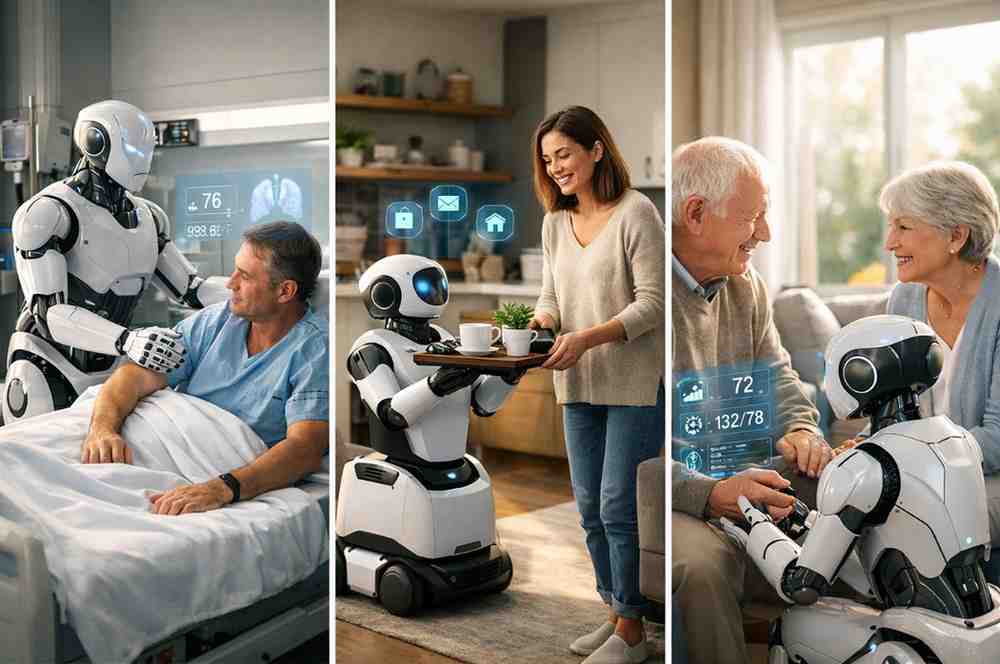
Robotics has emerged as one of the most transformative technologies of the 21st century, revolutionizing healthcare, industry, and everyday life. From surgical robots and automated rehabilitation devices to household assistants and industrial automation, robots are enhancing human capabilities, improving efficiency, and shaping a future where humans and machines collaborate seamlessly.
Robotics in Healthcare
Healthcare has been a primary beneficiary of robotics, improving precision, safety, and patient outcomes.
Surgical Robotics
- Precision and Minimally Invasive Surgery: Robotic surgical systems like the da Vinci Surgical System allow surgeons to perform complex procedures with enhanced precision, reduced blood loss, and smaller incisions.
- Remote Surgery: Robotics can facilitate tele-surgery, enabling expert surgeons to operate on patients in distant locations.
Rehabilitation and Assistive Robotics
- Physical Therapy: Robots assist patients in regaining mobility after strokes or injuries by providing repetitive, guided movements.
- Exoskeletons: Wearable robotic suits help paralyzed or disabled individuals walk or regain motor functions.
Diagnostic and Monitoring Tools
- Robotic Imaging: Automated imaging systems improve accuracy in diagnostics.
- Patient Monitoring: Robotics integrated with AI can monitor vital signs, detect anomalies, and alert healthcare professionals promptly.
Pharmaceutical and Laboratory Automation
Robots streamline laboratory processes, automate sample handling, and ensure precision in drug manufacturing.
Robotics in Daily Life
Outside healthcare, robots are becoming integral to our daily routines, enhancing convenience, safety, and efficiency.
Household Robots
- Cleaning and Maintenance: Robotic vacuum cleaners, mops, and lawnmowers automate mundane tasks, saving time and effort.
- Assistance for Elderly and Disabled: Robots provide reminders, mobility support, and emergency alerts, promoting independence.
Service Industry and Retail
- Customer Service Robots: Hotels, airports, and stores use robots for check-ins, information provision, and deliveries.
- Food Preparation: Automated kitchens and robotic baristas enhance speed and consistency in food service.
Education and Entertainment
- Educational Robots: Interactive robots aid learning in classrooms and at home.
- Entertainment: Social and gaming robots engage users, providing companionship and interactive experiences.
Benefits of Robotics
- Enhanced Precision: Robots perform tasks with consistent accuracy, reducing human error.
- Increased Efficiency: Automation accelerates repetitive or labor-intensive tasks.
- Safety: Robots handle hazardous environments, reducing risk to humans.
- Accessibility: Assistive robots empower people with disabilities or mobility challenges.
- Cost Savings: Long-term efficiency and automation reduce operational costs.
Challenges and Considerations
- High Costs: Advanced robotic systems can be expensive to develop and maintain.
- Technical Limitations: Robots may struggle with complex, unpredictable, or nuanced tasks.
- Ethical and Social Concerns: Job displacement, privacy, and human-robot interaction ethics must be addressed.
- Maintenance and Reliability: Ensuring continuous, safe operation requires robust infrastructure and monitoring.
Future Prospects
- Integration with AI: Smarter robots capable of learning and adapting to new tasks.
- Telepresence and Remote Assistance: Extending expert care and companionship to remote or underserved areas.
- Personalized Healthcare: Robots delivering tailored therapies and monitoring individual health profiles.
- Smart Homes and Cities: Seamless integration of robots into everyday life, enhancing convenience and quality of life.
As technology advances, human-robot collaboration will become more intuitive, safe, and impactful.
Conclusion
Robotics is no longer a distant futuristic concept—it is here, shaping healthcare and daily life in tangible ways. From saving lives in operating rooms to assisting with household chores, robots enhance human potential, efficiency, and quality of life.
While challenges like cost, ethics, and technical limitations remain, continued innovation promises a future where robotics complements human capabilities, making society safer, healthier, and more productive.