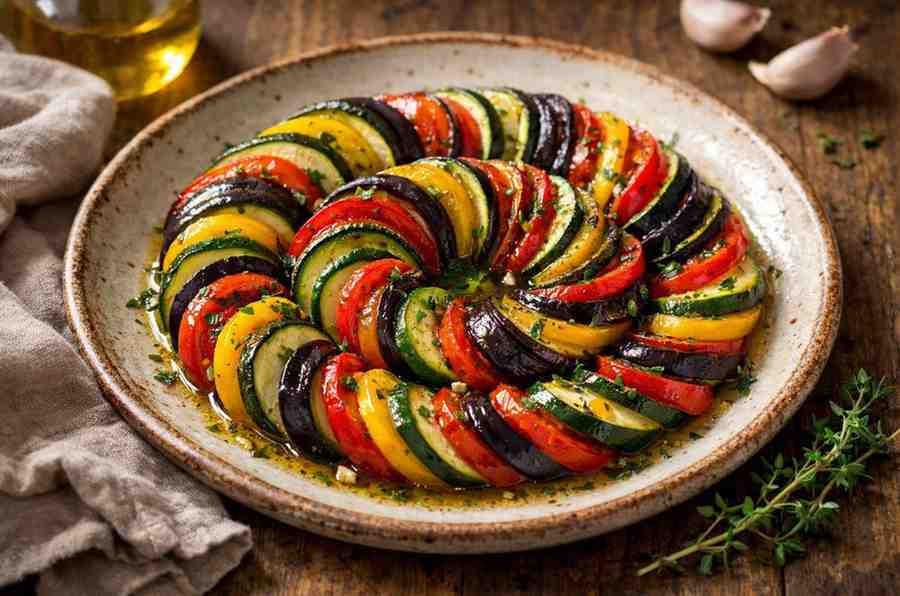
Ratatouille is a classic French vegetable stew that hails from the Provence region, particularly Nice. Bursting with color, aroma, and flavor, this dish has become a global symbol of French rustic cuisine. While it is simple in ingredients, Ratatouille embodies the essence of fresh, seasonal produce and the skillful layering of flavors that French cooking is known for.
Origins and History
Ratatouille’s roots trace back to the 18th century in southern France. The word “Ratatouille” comes from the French verb “touiller,” meaning “to stir up,” which reflects the cooking method of gently simmering vegetables together. Initially considered a humble peasant dish, Ratatouille was made to utilize abundant summer vegetables like tomatoes, zucchini, peppers, and eggplants, maximizing flavor without meat.
Over time, Ratatouille gained popularity beyond Provence and became a staple in French households and fine dining alike, celebrated for its versatility and depth of flavor.
Ingredients and Traditional Preparation
Core Ingredients
- Eggplant (aubergine)
- Zucchini (courgette)
- Bell peppers (red, yellow, or green)
- Tomatoes
- Onions
- Garlic
- Olive oil
- Fresh herbs such as thyme, basil, and parsley
- Salt and black pepper
Traditional Cooking Method
- Sautéing Vegetables: Each type of vegetable is usually sautéed separately in olive oil to preserve its texture and flavor.
- Layering or Mixing: The vegetables are then combined in a large pot or baked dish.
- Simmering: Slow cooking allows the flavors to meld together, often finished with fresh herbs.
- Serving: Ratatouille can be served warm or at room temperature, either as a side dish, main vegetarian course, or accompaniment to grains and proteins.
A popular modern variation is the "confit byaldi," made famous by the animated film Ratatouille, where vegetables are thinly sliced and elegantly arranged before baking.
Regional Variations
- Nice (Provence): Emphasizes fresh, diced vegetables sautéed in olive oil with herbs.
- Toulouse and Marseille: Often include onions and peppers in different proportions, sometimes incorporating wine or garlic more prominently.
- Modern Adaptations: Some chefs add roasted bell peppers or drizzle balsamic reduction for a gourmet twist, while vegan and gluten-free variations cater to contemporary dietary preferences.
Nutritional Benefits
- Vitamins and Minerals: Tomatoes, peppers, and zucchini provide vitamins A, C, and potassium.
- Fiber: Promotes healthy digestion.
- Antioxidants: Eggplants and tomatoes are packed with antioxidants, which support heart health and reduce inflammation.
- Healthy Fats: Olive oil contributes monounsaturated fats, supporting cardiovascular health.
Ratatouille in Modern Cuisine
Ratatouille has evolved from humble peasant food to a dish celebrated in fine dining and global cuisine. Its adaptability makes it suitable for various presentations: layered elegantly, served as a hearty vegetable stew, or incorporated into wraps, pasta, and grain bowls. Modern chefs often pair Ratatouille with fresh herbs, aged cheeses, or a drizzle of balsamic reduction, bridging rustic tradition with contemporary culinary creativity.
Its appeal lies not only in flavor but also in its vibrant visual presentation, making it a feast for both the eyes and the palate.
Conclusion
Ratatouille exemplifies the beauty of simplicity, seasonality, and harmony in cooking. From its origins as a modest French countryside dish to its place in modern global cuisine, Ratatouille continues to celebrate the vibrant flavors and textures of fresh vegetables.
Whether served as a comforting meal on a family table or as an elegant dish in a gourmet restaurant, Ratatouille reminds us that the finest flavors often come from humble beginnings, patience, and a love for fresh ingredients.