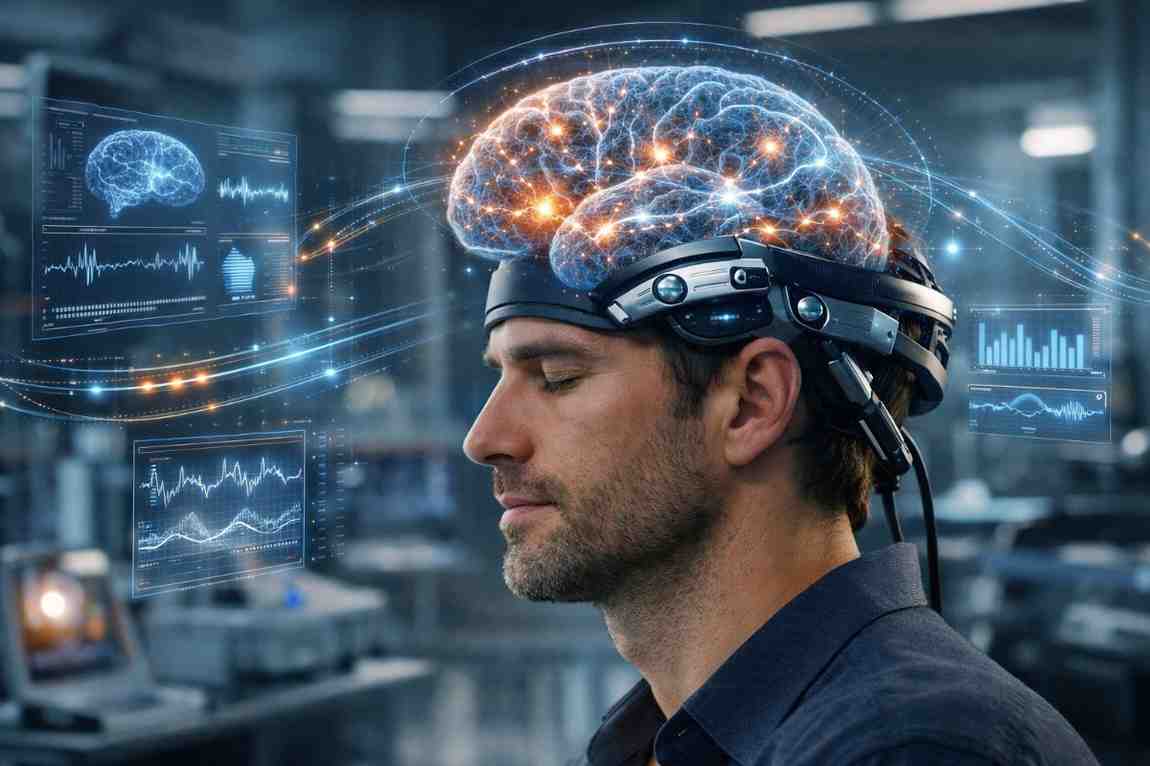
Brain-Computer Interfaces (BCIs) have captured the imagination of scientists, tech enthusiasts, and the general public. The promise of controlling devices with thoughts, restoring mobility to paralyzed patients, and even enhancing cognitive abilities seems almost like science fiction. However, while BCIs have made remarkable progress, there is a significant gap between the hype and the current reality.
The Hype: What BCIs Promise
BCIs are designed to establish a direct communication pathway between the brain and external devices. The hype surrounding BCIs often highlights:
- Mind-Controlled Devices: Using thoughts to move robotic limbs, type on a computer, or control smart devices.
- Medical Breakthroughs: Restoring movement to paralyzed individuals, treating neurological disorders, and enabling brain-to-brain communication.
- Cognitive Enhancement: Potentially augmenting memory, learning, and mental performance.
- Entertainment and Gaming: Immersive experiences where players control avatars or interact with virtual environments purely through neural signals.
These visions have fueled excitement, investment, and media attention, creating a perception that these capabilities are imminent.
The Reality: Current Capabilities
- Medical Applications: BCIs have shown promise in helping patients with ALS, spinal cord injuries, or severe paralysis communicate via simple text or control limited robotic limbs.
- Invasive vs. Non-Invasive BCIs: Invasive BCIs (implants) offer more precise signals but carry surgical risks. Non-invasive BCIs (EEG-based) are safer but provide lower resolution and slower response times.
- Limited Complexity: Current BCIs can perform basic commands but cannot yet support seamless, high-bandwidth interactions required for complex mind-controlled operations or cognitive enhancement.
- Data Interpretation Challenges: The brain is incredibly complex, and decoding intentions accurately and reliably remains a significant challenge.
In short, BCIs are functional but far from the futuristic, mind-reading technologies often portrayed in media.
Key Challenges
Technical Challenges
- Signal Acquisition: Capturing clean neural signals is difficult due to noise and interference.
- Data Processing: Decoding intentions from neural activity requires sophisticated algorithms and machine learning models.
- User Adaptation: Training users to operate BCIs effectively can be time-consuming and mentally taxing.
Ethical and Social Challenges
- Privacy: Neural data is highly personal, raising concerns about misuse or unauthorized access.
- Consent: Vulnerable populations may be pressured to use BCIs without full understanding of risks.
- Equity: High costs could limit access, exacerbating societal inequality.
- Psychological Impact: Long-term effects of BCI use on mental health and identity remain largely unknown.
Moving Towards Realistic Expectations
- Medical Rehabilitation Focus: BCIs will likely continue to have the greatest impact in assisting individuals with disabilities.
- Incremental Advancements: Progress is stepwise, focusing on improving signal accuracy, device reliability, and user experience.
- Interdisciplinary Collaboration: Neuroscience, computer science, ethics, and engineering must work together to ensure safe and effective deployment.
- Transparent Communication: Avoiding exaggerated promises helps maintain public trust and sets achievable goals.
Conclusion
Brain-Computer Interfaces are an exciting frontier in technology and neuroscience, offering profound possibilities for medicine and human-computer interaction. However, separating hype from reality is essential. Today, BCIs provide limited but meaningful benefits, primarily in medical rehabilitation and assistive technology. The dream of controlling the world purely with thought remains a longer-term vision.
As research progresses, careful attention to technical, ethical, and social challenges will ensure BCIs develop in ways that are safe, equitable, and genuinely transformative rather than merely speculative.